

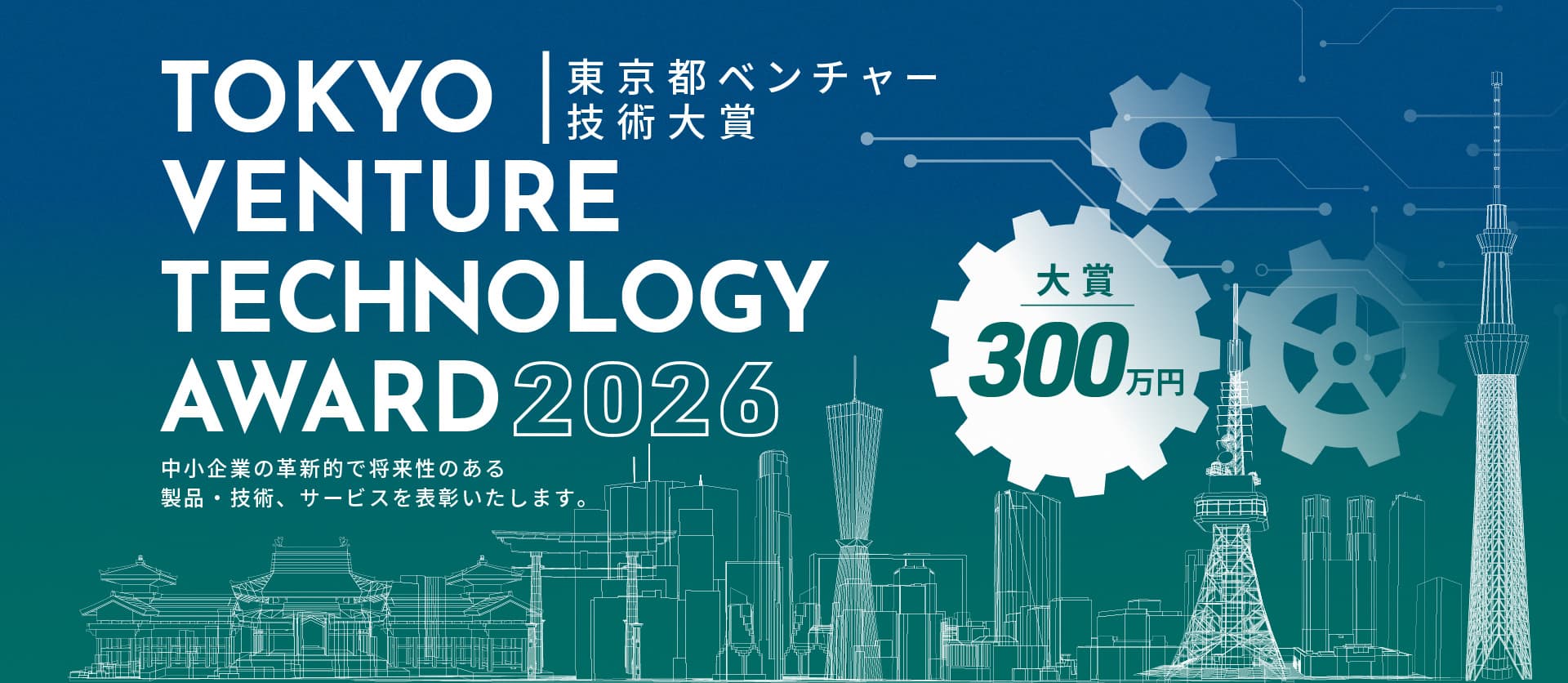
Tokyo, Japan | November 11, 2026
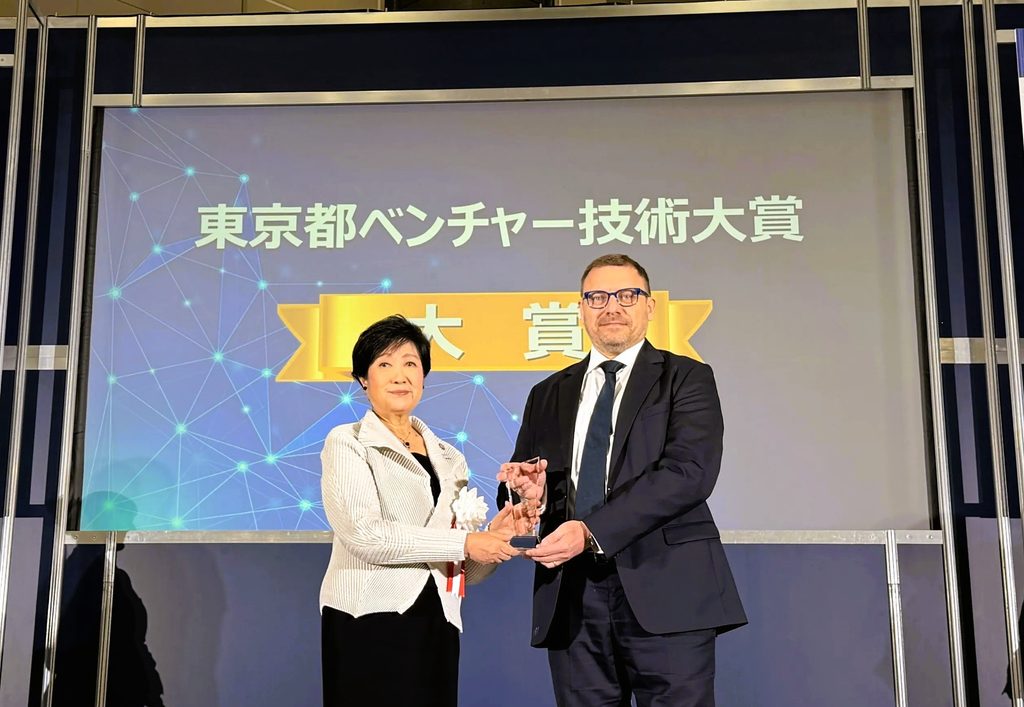
hibot Corp. is proud to announce that its multi-articulated robotic arm, Float Arm, has won the Grand Prize at the 2026 Tokyo Venture Technology Awards, organized by the Tokyo Metropolitan Government. The award ceremony was held on November 11, 2026, during the Industrial Exchange Exhibition in Tokyo.
Our mission has always been to make inspections in hazardous or inaccessible environments—such as oil and gas, chemical, and power plants—safer and more efficient through the power of robotics and data. We are deeply honored that our continued efforts toward this goal have been recognized.
About the Tokyo Venture Technology Awards
The Tokyo Venture Technology Awards recognize innovative, promising products, technologies, and services developed by small and medium-sized enterprises in Tokyo. The program aims to promote technological innovation and revitalize Tokyo’s industries by showcasing the value and potential of these innovations. Awards include the Grand Prize, Excellence Awards, Encouragement Awards, and Special Awards. Winners also receive support for publicity and sales promotion following the ceremony.
About Float Arm
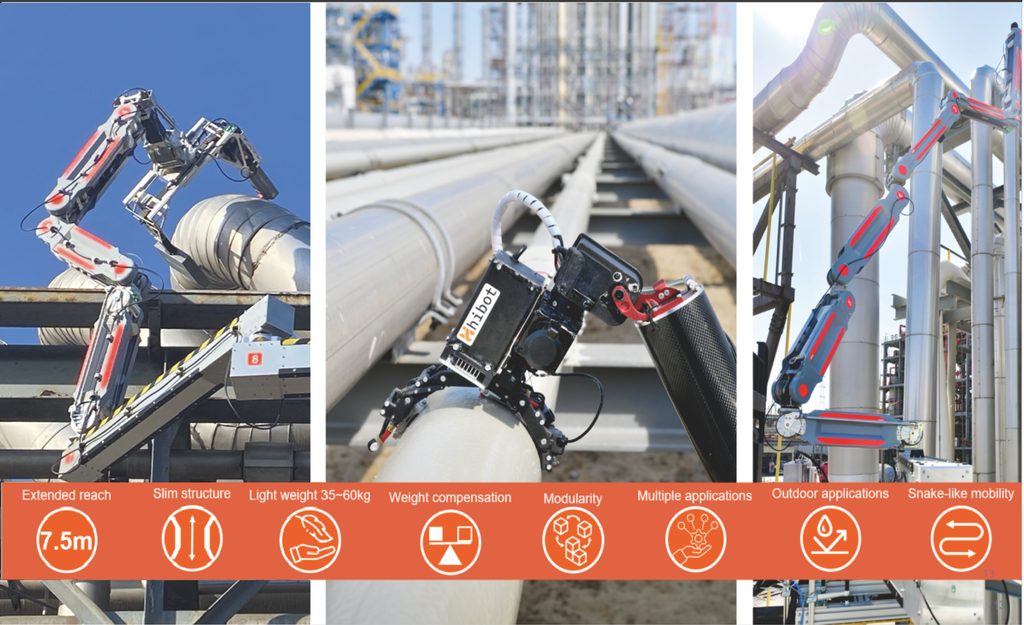
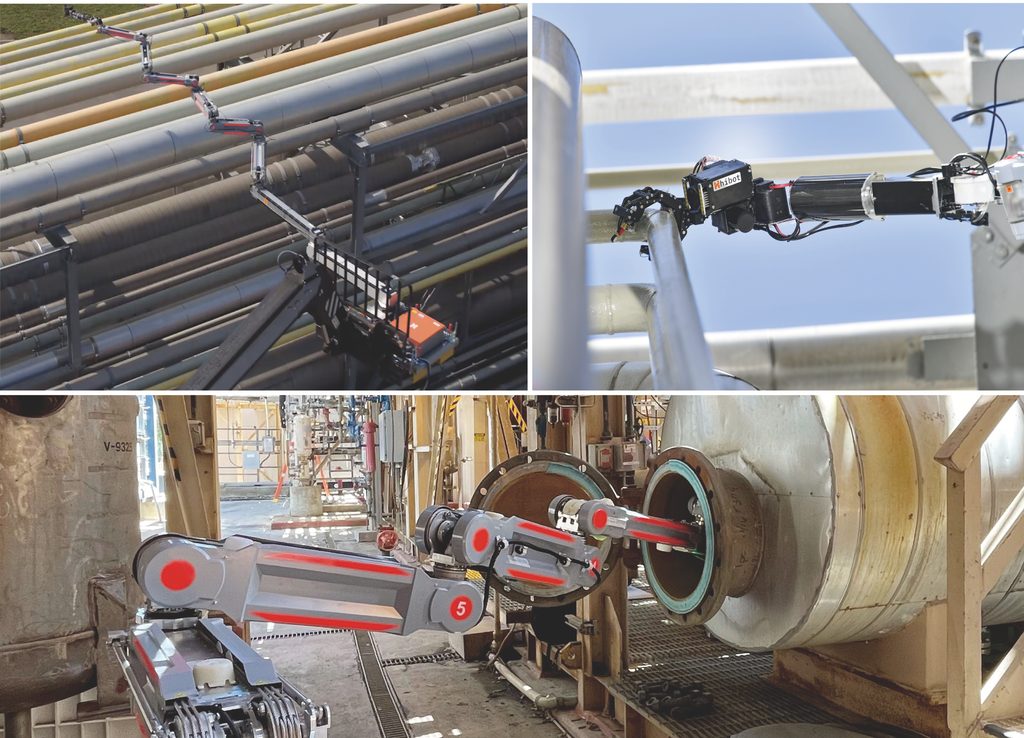
Float Arm is a snake-like, multi-articulated robotic arm developed for the inspection and maintenance of industrial plant facilities. As of October 2026, its nine joints and 20 degrees of freedom are controlled by proprietary motion-control technology, enabling the robot to navigate around obstacles and access confined, elevated, and enclosed spaces, including pipe racks and storage tanks. It collects high-precision inspection data without requiring personnel to enter hazardous areas.
By exchanging its end-effectors and tools, Float Arm can perform multiple non-destructive testing (NDT) methods using a single robotic platform, including visual inspection, ultrasonic thickness measurement, X-ray-based corrosion under insulation (CUI) inspection, pulsed eddy current (PEC), and electromagnetic acoustic transducer (EMAT) testing and soon also maintenance operations.
Three Key Technological Features
1. Patented Pneumatic Gravity Compensation Mechanism
Float Arm features a proprietary mechanism that passively counterbalances the arm’s own weight using compressed air. This allows the joint motors to focus solely on movement, enabling significantly smaller motors and a slimmer, lighter overall design. The mechanism can also maintain the arm’s posture using air pressure even if electrical power is interrupted, enhancing safety in industrial plant environments.
2. Snake-Inspired Motion Control
Inspired by the movement of snakes and the tendon structure of the human hand, Float Arm incorporates a biomimetic design philosophy. Its multiple links work in coordination to navigate around obstacles and reach target inspection points that are difficult to access using conventional methods.
3. Integration with the HiBox Data Platform
Inspection data collected by Float Arm is consolidated in HiBox, hibot’s cloud-based data platform, enabling an integrated workflow from data analysis to reporting. This helps transform infrastructure inspection, traditionally reliant on paper-based records and visual assessments, into data-driven predictive maintenance.
>>Product page: Float Arm
Proven Benefits: Improving Inspection Time, Cost, and Safety
Traditionally, inspecting elevated or confined spaces requires the installation and removal of scaffolding, resulting in extended work schedules, high costs, and increased safety risks. Float Arm can access inspection points without scaffolding, delivering the following benefits in actual field deployments:
- Shorter inspection time: Completes routine inspections in one day that previously took five to six days, improving work efficiency by more than fivefold.
- Reduced costs: Eliminates the need for scaffolding, reducing total costs by up to 30%.
- Enhanced safety: Reduces the need for workers to enter hazardous areas and confined spaces, helping to significantly reduce occupational accident risks.
From Fukushima Daiichi Decommissioning to Industrial Plant Inspection
The origins of Float Arm lie in research on snake-like robots and multi-articulated robotic arms at Tokyo Institute of Technology, now Institute of Science Tokyo.
In 2016, hibot developed and deployed a long-reach, multi-articulated robotic arm for decommissioning work at the Fukushima Daiichi Nuclear Power Station. Operating in radiation-contaminated areas of the reactor buildings where human access was not possible, the robot carried out video recording and 3D data collection over approximately two weeks, contributing to the planning of debris removal.
Float Arm represents the evolution of technologies developed for environments where human access is extremely difficult or impossible, redesigned into a slimmer and lighter product for broader industrial applications.
The modular design of Float Arm allows its reach to be configured by combining links to suit the requirements of each worksite.
The product’s name reflects its ability to move as though it were “floating,” rather than being constrained by its own weight.
Comment from Michele Guarnieri, Co-founder, CEO of hibot Corp.
“Winning this award is an amazing achievement, and all of us at hibot are very proud. As a Tokyo company, we are especially grateful to the Tokyo Metropolitan Government for this recognition. Float Arm’s roots go back to 2016, when we deployed a long-reach robotic arm inside the Fukushima Daiichi Nuclear Power Station to collect data where no person could enter. Today that same technology supports the daily operations of industrial plants and keeps operators safe. We look forward to bringing these benefits back to Tokyo by helping protect the infrastructure that the metropolitan area’s essential services depend on.”
Looking Ahead
hibot will continue to develop new end-effectors and inspection tools and advance the integration of sensors and AI for predictive maintenance. By providing an integrated service covering the entire process—from inspection and data analysis to reporting—we aim to accelerate labor-saving solutions and digital transformation (DX) in infrastructure maintenance.
Through these efforts, we will expand the range of inspection tasks that can be performed by a single Float Arm system and contribute to a safer, more efficient, and more sustainable society.
hibot Corp. | PR Team