

SQUID
Boiler tube & tank heating coil inspection
Tank heating coils, inspected in service
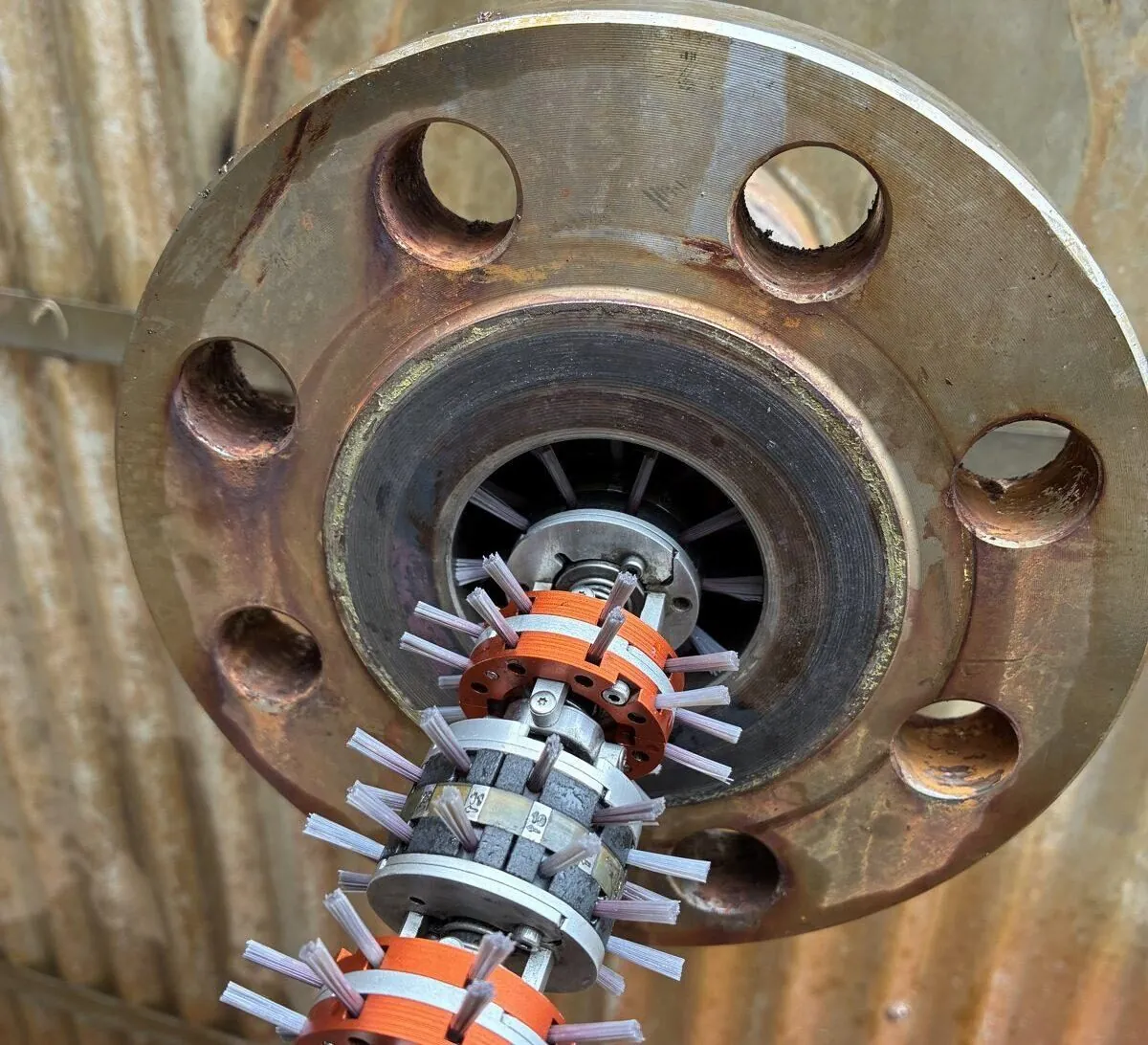
SQUID was built to inspect boiler tubes from the inside. The same system now reaches the steam heating coils in operating storage tanks, through the two coil flanges that are already there.
24 UT channels read the wall every 5 mm at 100 mm/s. You get a continuous thickness map of the whole coil, instead of a few readings where an inspector could reach.
One crew, one trailer, zero confined-space entry.
-
Open both coil flanges
SQUID enters at one, water circulates out at the other. Nothing is drained.
-
Flush, then couple with water
Dirty coils are flushed first in an open circuit. UT reads through water onto a clean wall.
-
Map the full wall
A brush-centred head maps 60–70 m of coil in about 40 minutes, U-bends included.
Conventional vs SQUID
| Conventional | SQUID | |
|---|---|---|
| Tank status | Out of service | In service |
| Preparation | Empty, clean, gas-free | Open both flanges |
| People inside | Confined-space entry | None |
| Data | Spot readings | Continuous UT map, 5 mm |
Is your coil a good candidate?
- Continuous coil, both flanges accessible
- Carbon steel or stainless, up to ~70 m*
- Outlet water up to 45 °C (higher case by case)
- Scale is fine; heavy sludge needs pre-cleaning
- Water supply at the tank
*Set by the 35 m cable used in the pilot. Longer cable, longer reach.
Industrial Boiler Inspection System
This is hibot’s new robotic system for inspection of industrial boilers.
Conventional boilers have one head drum, which is the starting point of several water pipes. Since those pipes are continuously exposed to high temperatures and hazardous gases on the outside, they must be inspected regularly. The most common cause of failure is corrosion, so it is important to monitor the thickness of all pipes.
More detailed information
| UT sensor | Inspection speed | up to 100mm/s |
|---|---|---|
| Inspection pitch | from 5mm | |
| Numbers of Channels | 24 | |
| Resolution of circumferential direction | 15˚ | |
| Maximum inspection distance | 40m | |
| Header | Internal diameter of header | 179.9mm ~ 185mm |
| Internal diameter of pipe for robot entrance | min. 102.3mm (*1) | |
| Pipe length for robot entrance | up to 400mm | |
| Distance between robot entrance and water pipe | 125mm ~ 2320mm | |
| Water pipe | Internal diameter of water pipe | 50mm~ 68.2mm(*2, *3) |
| Acceptable bends | from 1D R45 | |
| Length | up to 45m | |
| Environment | Power supply | AC 100V/240V |
| Others | Header and water tube must be filled with pure water. | |
- *1: Confirmed value in the field. The robot may enter smaller pipes. Please feel free to consult us.
- *2: Confirmed value in the field. The robot may be used in smaller water pipes. Please feel free to consult us.
- *3: Now working on a version for smaller diameter pipes.


SQUID Three Main Modules
-
Sensor Module
which is inserted in each pipe and scans the entire surface of the pipe from the inside, making use of a multiple-channel UT sensor.
-
Reel Module
Controlling autonomously the deployment and retrieval of the sensor unit
-
Pump Unit
Utilized to generate the flow for assisting the sensor motion through all pipes
With the robotic boiler inspection system, the pipes can be scanned continuously from inside. The result of the inspection is a 2D map of the pipe indicating the wall thickness by color. Areas where the wall thickness falls under pre-defined limits are clearly visible, making repair works much more efficient and faster.
Verification Results
The robotic boiler inspection system is fully compatible with HiBox, and benefits from its data management and processing modules. With HiBox, data processing and report generation happen on the site, providing invaluable information for asset managers. Furthermore, by comparing data from previous inspections, it becomes possible to predict where the pipes may require maintenance in the future.
Smart societies require smart solutions to inspect and maintain their infrastructure. The robotic boiler inspection system is hibot’s contribution to keep boilers healthy and running!


Case studies
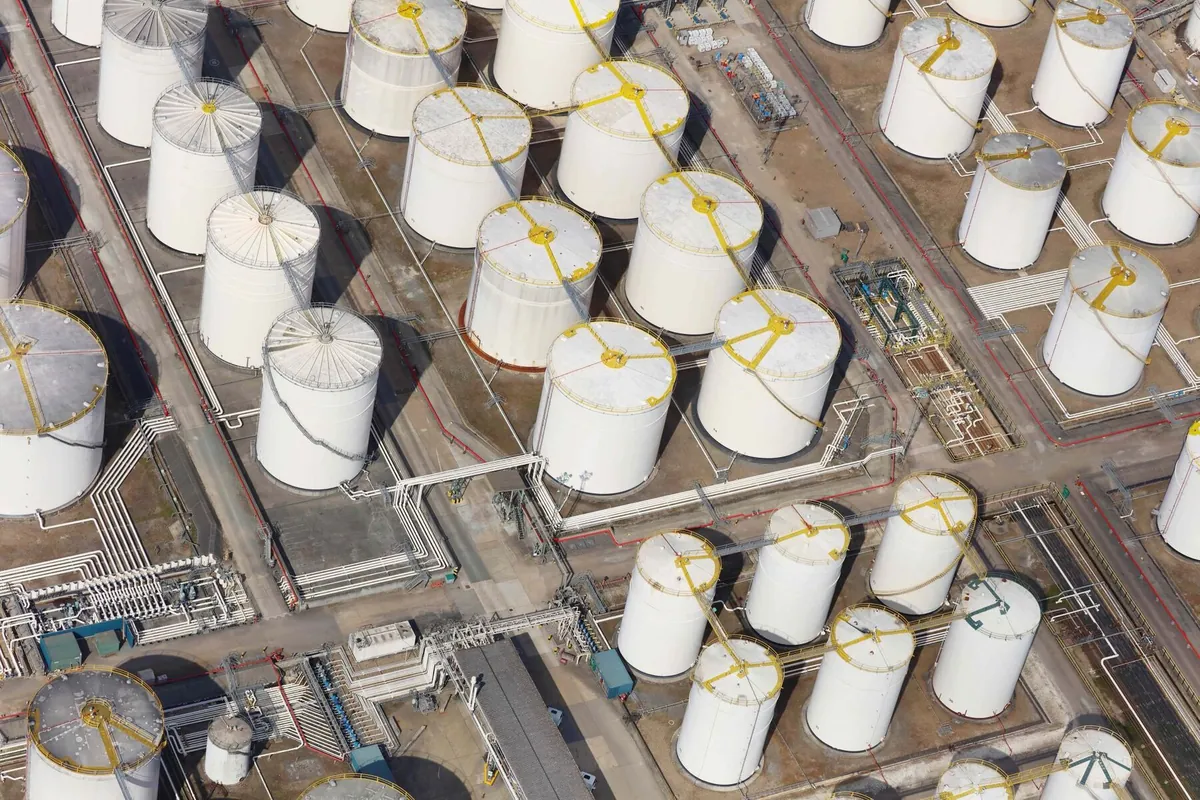
Seven storage tanks inspected while the plant kept running
A major oil company piloted SQUID on the steam heating coils of its lubricant additives plant. 330 m of coil mapped, no tank entries, no drains.
Read the case →